“ARC Fire Safety are a preferred supplier for Wernick Hire and never fail to deliver. They are able to offer a fantastic customer service whilst being competitive in cost and completing the job safely and effectively.”
A large proportion of fire alarm systems and Intruder alarms are monitored so they will alert an alarm receiving centre (ARC), in the event of an activation. It is a public misconception that alarms directly call the Police of Fire Service.
BS 8591 and the BS EN 50518 suite are the main standards that alarm monitoring centres must comply with.
Historically, most remote monitoring was achieved by a transmission unit sending coded signals down a dedicated telephone line. With the advances in mobile technology as well as the cessation of copper telephone lines in 2025, most monitoring is a now achieved using the mobile data networks. Systems such as Digital Communicator and Redcare will be disappearing. Get in touch with our team to learn more about what we can offer your business/property/building.
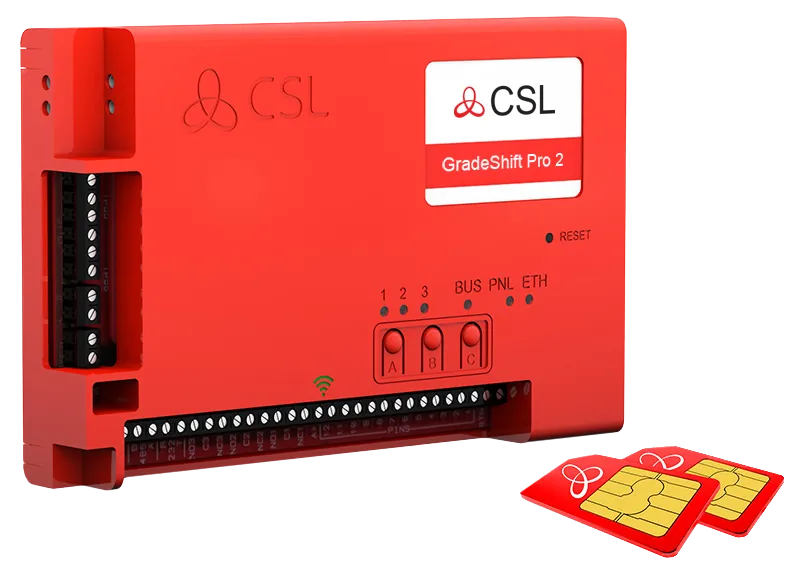
Single/ Dual Path
Monitoring used to send signals down a telephone line, which was a ‘Single’ path. If the line was in fault, or if an intruder cut the line before entry, some systems could let the ARC know the line was down. Although they could alert the keyholder, no further transmissions would be possible, so even the ARC would not know if there was a fire or intrusion.
As technology advanced, Dual path systems became available. This would normally comprise a telephone line plus a mobile network back up. If one path failed, the second path could still send any alarm signals.
Most dual paths now will take the following forms,
- Radio/Lan – This will be one path via a world sim so using all the main mobile networks. The system will use the strongest or will switch if a network goes down. The second path will be a connection onto the customers internal data network to go out effectively via the internet.
- Radio/Radio – Where a LAN connection is not available, both paths can be the radio type, with two independent Sims being utilised.
Fire and Intruder monitoring
The most used system in the UK currently is Dualcom. This is available in different technology levels, depending on the application as well as different transmission types.
The grades are based on the catastrophic failure reporting times as follows,
- DP4 (highest security): 3 minutes catastrophic failure reporting.
- DP3: 4 minutes catastrophic failure reporting.
- DP2+: 11 minutes catastrophic failure reporting.
- DP2: 31 minutes catastrophic failure reporting.
The new revision to BS5839: Part 1-2025 state a fire system should be monitored by a Grade DP4 system. This is only available in Radio/Lan. If no Lan connection is available, it is permissible to write in a variation to accommodate.
Remote Access
An additional way of communicating with fire and security systems is via systems which provide a remote access . Engineers can access the systems via a security process with the customer and remotely interrogate the systems. This can improve efficiency where parts required can be taken to site, or with the customers agreement, faults can be temporarily isolated.
CCTV Monitoring
CCTV systems can also be monitored via an ARC. This is available in many different formats. Camera technology or external detectors can be set up to trigger the activation to the ARC, who can then connect in and look at the cameras.
Get in touch with our team at ARC Fire Safety & Security Ltd to discover more about what we can offer you, or call 08081007707 for more information.
Accreditations